
Criminal Court Records in Yazoo County
A criminal court record is the full case file a court clerk opens once a criminal charge is filed. It is not a single page. It is a running collection of the charging paper, every motion, each order a judge signs, the docket of hearings, the plea, the verdict, and the sentence. In Yazoo County the file is held by the clerk of the court where the case is prosecuted. For felony and Circuit Court matters that office is the Circuit Clerk, who serves as clerk of both the Circuit and County Courts and keeps the indictments, motions, judgments, and executions filed in those cases.
Criminal cases in Yazoo County are split by the level of the offense. Felony cases begin with an initial appearance and an affidavit in Justice Court, then move to Circuit Court for grand jury indictment and trial. Circuit Judge Jannie M. Lewis-Blackmon presides over the Circuit Court district that covers Holmes, Humphreys, and Yazoo counties. The County Court may take non-capital felony cases transferred from Circuit Court, and it can also set bond, issue search warrants, and hold preliminary hearings. Misdemeanor criminal cases are heard in Justice Court for offenses outside the city, or in the Yazoo City Municipal Court for violations inside city limits. Each court keeps its own criminal record.
How to Search Yazoo County Criminal Court Records
There is no single county web page that searches every court at once. For Circuit, County, and Chancery Court cases, the statewide path is Mississippi Electronic Courts and its public access component, PAMEC. The Mississippi Judiciary states that these trial courts e-file through the system and that digital documents can be viewed by subscribers. Public viewing requires an account, and document pages carry a per-page charge. Justice Court and Municipal Court do not offer an online case search, so those records are obtained by contacting the clerk directly.
- Identify the court first. Felony prosecutions and jury trials point to Circuit Court; transferred non-capital felonies may sit in County Court; city misdemeanors point to Municipal Court; county misdemeanors and initial felony appearances point to Justice Court.
- For a Circuit or County Court case, register for PAMEC and search by the defendant's legal name or the case number if it is known.
- Narrow the search by county and court so the results return Yazoo County matters rather than statewide hits.
- Open the case to read the docket entries, the charges, and the disposition; expect older or restricted documents to be missing from the online file.
- Request a certified copy from the Circuit Clerk when a stamped record is needed for legal use, and call ahead to confirm the copy fee.
For a statewide criminal-history check rather than a single case, the record runs through the Mississippi criminal-history system held by law enforcement, and a court file is still the authoritative source for what actually happened in a given case. The Yazoo County Circuit Clerk can confirm whether a felony or County Court file is available online or only at the office counter. A broader walk through every record type is on the Yazoo County court records page.
Stages of a Yazoo County Criminal Case
A criminal case moves through a set order of steps, and each step leaves a mark in the file. Reading the docket in order is the easiest way to see where a case stands. The flow below shows the path a Yazoo County felony usually follows from the first court paper to the final judgment.
Case flow: Charges Filed › Arraignment › Pretrial / Motions › Plea or Trial › Disposition › Sentencing
Felony charges in Yazoo County are prosecuted by the District Attorney for the 21st District, Akillie Malone-Oliver, whose office covers Holmes, Humphreys, and Yazoo counties. District numbering is subject to redistricting, so the district number may change. The prosecutor decides how to charge, whether to seek an indictment, and what plea to offer, and those choices show up as entries in the case file.
The shared-district contact for the District Attorney is confirmed through the Holmes County courts page, since the same office serves all three counties in the district.
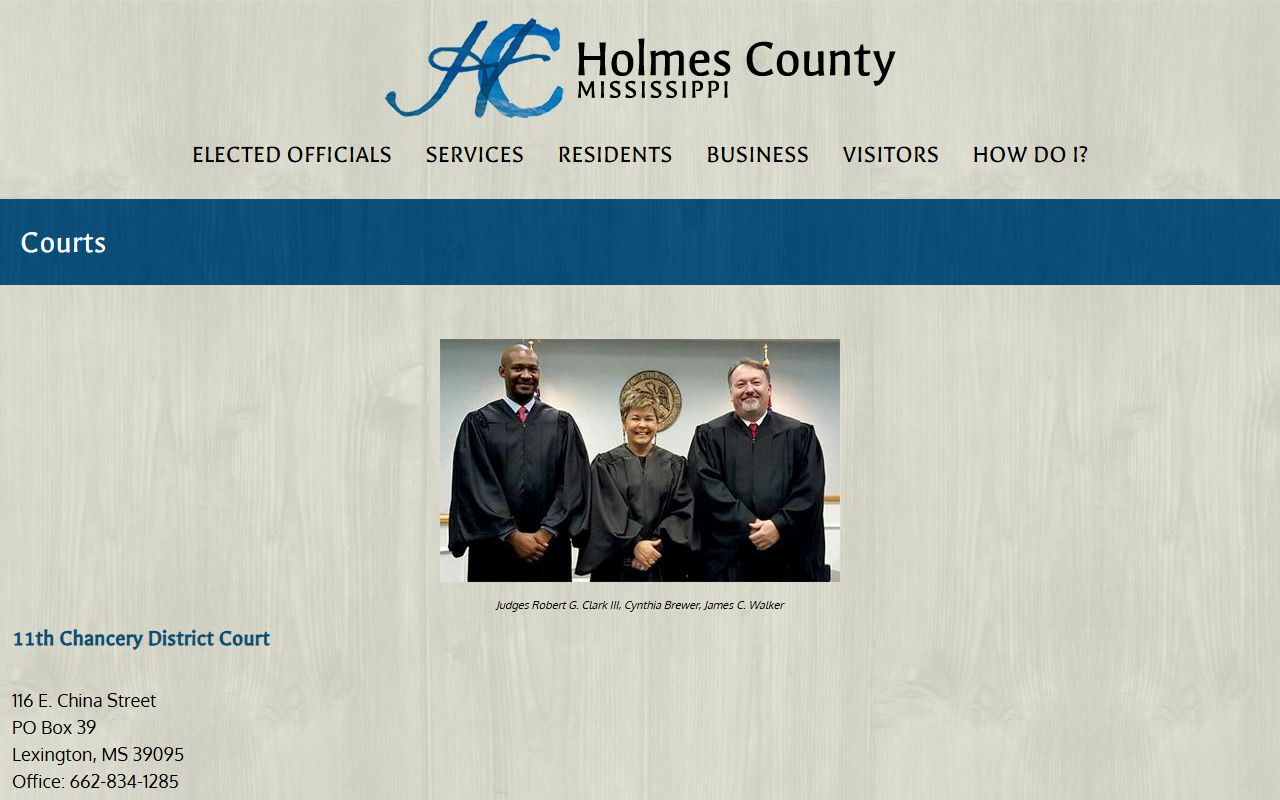
That district listing is useful because the District Attorney drives the felony side of every Circuit Court criminal record in Yazoo County, from indictment through sentencing recommendation. The table below sets out what each major stage adds to the file.
| Stage | What Happens |
|---|---|
| Arraignment | The court reads the charges to the defendant and a plea is entered, commonly guilty, not guilty, or no contest. The plea and the date are recorded. |
| Pretrial / Motions | Lawyers file written requests asking the judge to rule on evidence, bond, or procedure. Each motion and the order on it is added to the docket. |
| Plea or Trial | The case ends in a negotiated plea or is tried to a jury. The verdict or the accepted plea is the turning point of the record. |
| Sentencing | After a guilty plea or verdict, the judge imposes the sentence, which may include jail or prison, probation, fines, court costs, or restitution. |
What a Yazoo County Criminal Court Record Shows
A criminal court file in Yazoo County may show a long list of fields, depending on the court and how the case was filed. A felony file in Circuit Court tends to carry the most detail, while a Justice Court misdemeanor file is shorter. The fields below are the ones a reader looks for first when opening a case.
| Field | What It Shows |
|---|---|
| Case Number | The court's file number, which is the fastest way to pull the exact record. |
| Defendant | The person charged, listed by legal name as it appears on the filings. |
| Charges | The offense or offenses filed, each with a statute citation and an offense level. |
| Plea | The defendant's answer to the charge, such as guilty, not guilty, or nolo contendere. |
| Disposition | The outcome of each charge, such as dismissed, guilty, not guilty, or transferred. |
| Sentence | The penalty imposed, including incarceration, probation terms, fines, costs, and restitution. |
A full file also tracks the arresting agency when it is shown, the bond amount and type, the arraignment date, every motion and order, trial settings, and any appeal entries. For a closer look at the charges themselves and how a charge can change as a case moves, the Yazoo County court charge records page breaks down charging documents and charge status.
Charges vs. Convictions
Being charged is not the same as being convicted. A criminal court record can show charges that were later dropped, dismissed, or that ended in an acquittal, and those entries stay in the file even when there is no finding of guilt. A charge is only an accusation that the state must still prove. A conviction is the finding, by plea or by verdict, that the person is guilty. Reading the disposition line for each charge is the only reliable way to tell the two apart.
| Charge | Conviction | |
|---|---|---|
| Stage | Accusation | Verdict or plea |
| Burden of Proof | Probable cause | Beyond reasonable doubt |
| Public Record | Yes | Yes |
Reading Yazoo County Criminal Dispositions
The disposition is the outcome the court records for a case or for a single charge. Common entries include guilty, not guilty, dismissed, and nolo contendere, which means the person does not contest the charge but accepts sentencing. A case may also be continued, which is a postponement, or dismissed with or without prejudice, which controls whether it can be refiled. A felony bound over or transferred has moved to another court for further action.
The sentence sits below the disposition and spells out the penalty. In a Yazoo County file the sentence can combine prison or jail time, a period of probation under court supervision, fines, statutory court costs, and restitution ordered to repay a victim. Reading the sentence in full matters, because terms like probation and suspended time change what a person actually serves.
Note: A disposition of dismissed or not guilty still appears in the public file unless a court later seals or expunges the record.
Sealed vs. Expunged Records
Some criminal records are kept out of public view. Sealing limits who can see a file while preserving it for authorized users, while expunction removes an eligible record from public access altogether. In Mississippi the main expunction statute is Section 99-19-71, which reaches certain misdemeanor convictions, one eligible felony conviction in specific circumstances, and cases where an arrest was made but the charges were dismissed, dropped, had no disposition, or ended in acquittal. The petition is filed in the court where the charge originated.
| Sealed | Expunged | |
|---|---|---|
| Visibility | Hidden from public | Removed from public access |
| Law Enforcement | Limited access | Very limited |
| Eligibility | Youth records and court-ordered restrictions under Miss. Code § 43-21-255 and § 43-21-261 | Eligible cases under Miss. Code § 99-19-71, filed in the court of origin |
Public Access to Yazoo County Criminal Records
Mississippi treats most adult criminal court files as public records, subject to sealing, juvenile confidentiality, and required redactions. The state policy of open access sits in the Public Records Act, and the practical rule for Yazoo County is that a request goes to the office holding the record. For Circuit and County Court files that means the Circuit Clerk or PAMEC; for city cases it means the Municipal Court clerk. Expunged and sealed files do not appear through these channels, and a public copy may hide Social Security numbers, account numbers, and other protected identifiers.
Key Statutes:
Mississippi Code § 25-61-1 - the Public Records Act makes the records of public bodies open for inspection unless a specific law exempts them.
Mississippi Code § 99-19-71 - sets out who may expunge an eligible criminal record and which dismissed or acquitted cases qualify.
Federal criminal cases are a separate system from the county file. Yazoo County falls in the U.S. District Court for the Southern District of Mississippi, Northern Division at Jackson, and federal prosecutions are handled by the United States Attorney rather than the county District Attorney. Federal records are searched through PACER, not through PAMEC or the county clerk.
The federal prosecutor for the area is the U.S. Attorney's Office for the Southern District of Mississippi, which handles federal charges that never enter the county court file.
Keeping the two systems straight matters, because a Yazoo County criminal court record search covers state charges only, while a federal matter for a county resident lives in the federal docket and never reaches the Circuit Clerk.
Background Check Considerations
People use criminal court records for many reasons, from confirming a court date to checking a name before a private deal. A casual lookup through a court file or PAMEC is not the same as a regulated background check. A formal background check run for hiring, housing, or credit must follow the Fair Credit Reporting Act and use a licensed consumer reporting agency, which a public records search is not.
Important: This site is not a consumer reporting agency under the Fair Credit Reporting Act, and its information may not be used for hiring, housing, credit, or other FCRA-regulated decisions.
Restricted Criminal Court Records in Yazoo County
Not every criminal matter is open to the public. Youth Court records are confidential under Mississippi law and are not searched like adult Circuit, Justice, or Municipal Court files, so a delinquency case will not surface through PAMEC or a clerk copy request. Sealed and expunged files are likewise withheld, and a court may restrict access to an active matter or to documents that contain sensitive information. Even an open file can be released in redacted form, with protected identifiers masked.
When a record cannot be found online, the next step is the clerk of the court that handled the case. The Yazoo County Circuit Clerk can confirm whether a felony or County Court file exists and how to request it, and the Municipal Court clerk handles city cases. Arrest and booking detail sits with the sheriff and the jail rather than in the court file, so a person tracing a recent booking should start there before the court record opens.